‘Blockchain Affects AI Profoundly’
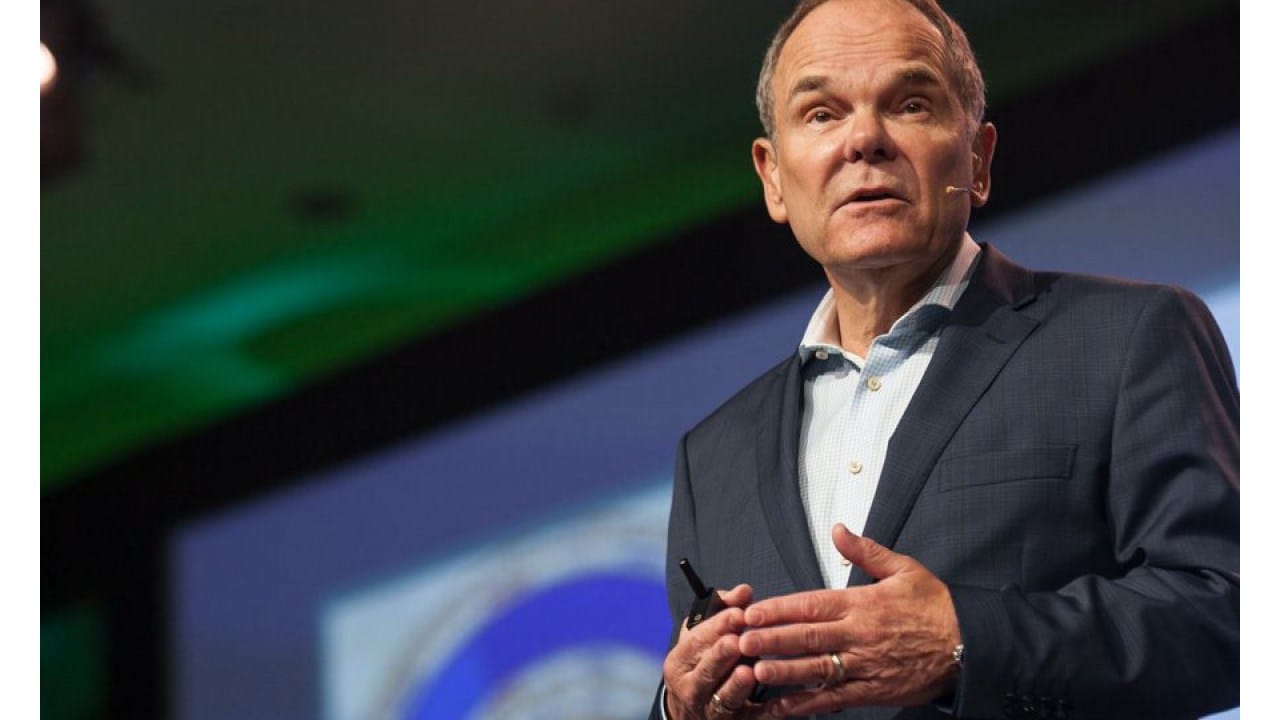
Co-Founder and Executive Chairman of the Blockchain Research Institute, Don Tapscott is arguably one of the world’s leading thinkers on the confluence of technology, business and society. A multi-bestselling author, his various books explain Blockchain and new technology simply and clearly. With over 5,000,000 books sold, his iconic ‘The Digital Economy’ has just been published in a 20th anniversary addition with a new foreword by Google CEO Eric Schmidt. In the run up to WEF 24, Lan Space magazine was privileged to talk to Don about the new challenges Blockchain answers and presents today, as well as the way in which this technology interacts with Artificial Intelligence.
Interviewer: You're one of the leading authorities in the world on the impact of technology on business and society. Right now, we all know the technology everybody is talking about is artificial intelligence - this is one of the main themes of WEF 2024. Your main research area is blockchain - have you been doing much research into the relationship between artificial intelligence, blockchain and its impact on business and society?
Don: Well, yes. Let me stand back a bit. The way that we are approaching this is that we're entering a new era, and we call it the web three era. This is inspired by Alex Tapscott's new book, Web Three, charting the Internet's next economic and cultural frontier. And the way that we view this is that there are four technologies coming together and that these are not separate, but they're all related, and each of them changes the other. The one that we've studied most is blockchain. And blockchain is going through some very big changes right now as we move from proprietary permissioned systems to using the public blockchain infrastructure that enables better integration, the creation and management transaction of digital assets and so on. And the way we think of that is that this is as ‘web three’, if you like. The first web that came out, as Tim Berners Lee created it, was really a platform for the presentation of content. You went to websites and you did it on a computer PC or a Mac laptop or something, and the web was a static medium for the presentation of information. Around 2002, the technology evolved and we started to see a second web where you could not only access the web, you could change the web, you could write to the web, and you could go onto Wikipedia and make an entry, you could create a community on Facebook and so on. And so the web really became a platform for computation, but also for collaboration. And then with the rise of blockchain, we're seeing a web three, where, unlike the previous web, where you created all this value and content, but it was captured by a tiny handful of companies, you get to retain the value that you create. And this is an extraordinary thing, and it's the basis of prosperity and the protection of our basic rights and privacy, and the new business model for culture and many other things going forward. Now, the second big technology is AI. Machine learning, large language models and so on. This is an overnight success story that began 60 years ago. And blockchain affects AI profoundly. AI will not be running on some giant central computer. It better not be, because that would be terrifying. It needs to be decentralised, and in doing so, to harness the computing resources of the whole world. But also with AI, there are big questions having to do with truth, the providence of information. What is valid in a world where you can falsify not just information, but you can falsify a video. Right now, I'm using AI to create videos of me, and all I do is enter the text into my AI. And I have this virtual Don Tapscott that looks exactly like me, giving a speech explaining all of the content of this text. Well, if I can do that for myself, I can probably do it for somebody else as well. And you can expect in the next year to see a video of Joe Biden admitting some horrific thing that he actually didn't do. So blockchain helps us with knowing the validity of information and the provenance of where it came from. Blockchain intersects with AI in many other ways. I'll just mention one more, which is smart contracts. These are agreements between people and organisations that are programmable and that are made of software. And the agreements have a bank in them and a payment system, and they self police, and they enable the transformation of the metabolism of transactions and business and basically everything that we do in society, leading to big changes in how we orchestrate capability in the world to innovate, to create goods and services and so on. The third technology of this web three era is extended reality. But again, extended reality is affected by these other technologies and should be. Take blockchain, for example. The current model of the metaverse is a Mark Zuckerberg model, where you go to his metaverse, he sets all the rules, he harvests all the value that gets created, he captures your data, and it's kind of like going to Disneyland. Now, there's nothing wrong with Disneyland. That's a fun thing to do. Take your kids, but don't think it's going to be some transformative human experience for the rest of your life. The metaverse needs to be decentralised on a blockchain. It needs to empower the creators of value to own that value, and so on. The final technology is the internet of things, billions and trillions of inert objects that become smart communicating devices. But again, these devices will be smart. They will learn. And when a light bulb buys power from a decentralised power source and pays for it promptly, its reputation as a trustworthy device will be established, and the network will learn about that device, and that that device abides by its commitments. And you program the device to purchase all the devices in your home, or for that matter, your business - to purchase power according to the criteria that you establish. Maybe you want it to be cheap, green, and always reliable, maybe in the opposite order. And the network is constantly learning to make sure that the power that you get fulfils your criteria. But also that transaction that we just described is not going to go through visa. You need a blockchain to be able to do that. So the web three era, all of these things come together. Now, I know that's sort of a long answer to a simple question, but when I talk about AI, I can't just talk about AI by itself, or I usually don't. I talk about its integration with these other technologies.
Interviewer: And that integration, do you see that as completely essential going forward for the success of artificial intelligence and machine learning? It rests on these two different technologies, blockchain, and then the extended reality.
Don: Yes. These four technologies together must integrate. This is essential for business success, but it's also essential for civilization and for our basic rights. It'd be a terrifying thing to extend the current model where we are the users of technology, but the platform is owned by massive centralised digital conglomerates. The seven big digital companies in the United States own half of the stock market. It's crazy. And we need to have a very different model of technology that empowers us where we can retain the value that we create for our own prosperity and to protect our basic rights, including privacy, which is the foundation of freedom. So I'm very passionate that this is not something that should be done. It's something that must be done. Otherwise, Orwell had no idea how bad it could get.
Interviewer: You are a very sensible, considered advocate for blockchain technology helping us moving forward into the future. What would you say to people who criticise the coins that are built upon blockchain, primarily Bitcoin, which was begun as an alternative to orthodox capitalism, but now seems to be becoming more and more part of the architecture of capitalism itself. For example, with ETFS. What would you say about that? Or what would you say are the potential pitfalls of blockchain? What should we be careful about?
Don: Well, there were a whole bunch of questions there. So the first one is about the problems that have recently plagued the whole marketplace for digital assets. This is a big discussion, but if this really is a new paradigm of technology, which I think it is, these things always attract unscrupulous people. Criminals are the first to adopt exciting technologies. The automobile, the cell phone, the Internet. Porn is still the main app on the Internet today. But you can't throw out the baby with the bath water. And it's estimated that less than one third of 1% of bitcoin transactions have some nefarious purpose. 3% of cash is used for criminal or nefarious activities. So we're not going to ban cash, I hope, because criminals use it. The second thing is people confuse the technology with the behaviour of some bad actors. FTX, for example, is alleged to be an example of why this technology is horrible and even should be banned. Well, the problem with FTX had nothing to do with technology. It was good old fashioned fraud. So again, let's be clear about what's going on. This is also the early days. It's kind of like the wild west. It's a place of recklessness and confusion and chaos and calamity. And our old regulatory infrastructure is not really fully equipped to deal with this. And sometimes we overreact. It's not just inadequate regulation, it's inappropriate regulation. For example, in the United States. Why on earth would the SEC wait so long to enable ETFs for this technology? Because this is a new asset class. There’s a whole set of issues about bad behaviour. I could go on about that and talk about the regulatory problems if you want. I will say that in fairness to the regulators, it's tough because you want to get the pendulum swing right. You want to make sure that you protect investors and consumers and so on, on the other hand, but you don't want to crush innovation. Here's a little quiz for your readers. What's the most valuable business ever created in Canada? Anyone who knows Canada might guess. Maybe it was, you know, BlackBerry, or maybe it was Nortel or Shopify or RBC, the biggest bank in Canada, or an oil company? All of these answers would be wrong. The biggest business organisation ever is Ethereum. It was created in Canada, but the regulatory environment drove it out of the country. All that innovation, all those jobs, all that tax revenue and so on. So getting this right is really important. Now, you were asking about bitcoin, and I do want to say something here, because this technology enables the digitization of all assets. Now, normally people look at these platforms and they think, well, the one that's being digitised is money. Currencies, right? Cryptocurrencies. Well, it turns out currencies are one of a dozen types of assets that are being digitised. You can digitise anything. Art, music. It's called NFTs. Non fungible tokens or tokens can be used to digitise a contract. You can digitise a synthetic, natural asset like a carbon credit or a real asset like a barrel of oil. And you think of tokens as a container, where you put the asset in the digital container. Or if it's something physical like a tree or a lake or a barrel of oil, then you can put all the data representing that into the container.
Interviewer: It's almost like going back to a barter economy. But digitised.
Don: Well, no, barter is one of the many ways that things can occur, but it's not a barter economy in my mind. It's more a digital economy. Now, I coined that term in 1994 in my book, called The Digital Economy - Promise and Peril in The Age of Networked Intelligence. So what is bitcoin, you ask? Well, I don't really care about what the original motivation of the creators of bitcoin was. They wanted to bring down capitalism or something. I'm not sure that was the case, but it doesn't really matter to me. The question is, what is it now? Today it has a value of, I don't even know! Let's look it up. $1.7 trillion.
Interviewer: It's a lot.
Don: It's a lot now. I mean, it's less than the market cap of apple, one company, but it's still a lot. And is it a currency? Well, currency is a unit of exchange. It's a medium for storing value. You can certainly store value. It's a record of account. But you don't walk into an automobile dealership and buy a car with a bitcoin. But it's closer to being a currency than anything else, I would say. But there's a lot of confusion about these digital assets. And again, I'm very excited about the book Web Three, because it clears all this up.
Interviewer: I have a last literary question for you. I have been thinking recently about Mary Shelley's Frankenstein, which could be called one of the first books on Artificial Intelligence. It was written at a time when Britain, at least, was going through enormous technological changes. This was when the term Luddite was coined, which described groups of men who were so worried about losing their jobs to the machines that were going into cotton mills that they started to attack them. Seeing the amount of terror and hysteria around technology made me realise that this wasn't the first time that we'd been standing on the precipice of a totally new technological age. Do you feel that the possible perils and pitfalls of what we're dealing with now is commensurate or equal to the kind of technological perils that people down the ages have dealt with, or are we really are standing at the edge of something that's never been experienced before.
Don: No, it's the latter. We really are on the edges of something that's never been experienced. The upside is extraordinary and the downside is terrifying. Now, this is a whole other topic, but I'm convinced that we're going to need a new social contract for the digital age. When we went from the Agrarian age, to the Industrial age, we figured out stuff. We figured out people needed to be literate and created the public education system and created a law that you have to go to school.. We figured people live in the city and created a public safety net. We figured out that you can't have one oil company owning all the oil and created anti-monopoly legislation. There are hundreds of decisions that we have made between government, business, civil society. We've done none of that today. So we assume that we have a basic right to privacy. Well, that's being destroyed. What are we going to do about that? I don't think the solution is more government protection. We ought to own our own data in a self sovereign identity. How do we solve the problem of prosperity paradox, where the first time in modern history, the economy is growing, the middle class is shrinking, there's wealth creation and declining prosperity? Well, people say you ought to redistribute wealth. Well, sure, maybe Elon Musk should pay some taxes, but that's not going to be adequate. We ought to redistribute wealth and change the way the economy works. I've discussed at length ways that that can be done. There's a fragmentation of public discourse. We've all ended up in our own little self reinforcing echo chambers, and people can create false information and build entire movements and societies around that. In the US we see the denial of not just science, but the truth. So how are we going to solve these problems that have led to a complete breakdown or crisis of legitimacy for democracy in the United States? Donald Trump gets elected. That will be the end of democracy in the US, at least for the foreseeable know. Democracies had a pretty short run anyway. If you look at the history of civilization, it's just a blip. So these are just a handful of the examples of things that I don't think we figured out at all. You figure out you're going to create prosperity for your family through a job? Well, in 48 of 50 states in the US, the number one job type for men is truck driver, and for women, it's cashier. Well, all of these are going to go away in the next decade. And it's not just blue collar, it's radiologists and pharmacists and translators. How do we protect our human agency? Probably not in my lifetime, but in my kids for sure. AI. And AIs will look at humans like we look at a puppy. How do we ensure that these things don't take over? This is not crazy, hysterical fear mongering. This is a real and present danger. So this is my big passion right now, is how do we build a new social contract for the digital age?