Korea’s Technology Power Couple
Korean Technology Company Clobio came to fame during the Covid-19 pandemic for its innovative, highly functional sterilisation products. These products are, however, just one part in the fascinating story of Korea’s business-science duo Ri Ki-Ho and JinYoung Park. In this interview, Ri Ki-Ho explains a little of how the pair met and what led them to first search for a cure for cancer, among other ambitious projects.
Clobio is a Korean technology which has already won national and international renown for its innovative products, including the Vplus Guard sterilisation line, developed during the Covid-19 pandemic. The liquid, spray, patch and gate are all harmless to humans but kill viruses and germs within 10 seconds of use. This is just one of their expanding lines of functional cutting-edge health driven technologies, which include Korean-government funded functional salt and Fresh-lab, a simple but revolutionary pouch which helps food stay fresh for up to one month longer than normal, without additives or preservatives. The pair behind Clobio, Ri Ki-Ho and JinYoung Park, are a renowned Korean science and business duo. The fascinating story of how they met and began to work together is one of contemporary Korean science’s best uncovered tales. Ri Ki-Ho tells his personal story to LantoCapital magazine here for the first time.
Interviewer: Ri Ki, you now run a renowned Korean technology company and are responsible for some of the country’s most fascinating technological developments in the last decades. Please tell me how this all started for you and a bit about your early life, your childhood, where you studied?
Ri Ki: I was born in Seoul in 1977. When I was young, I was a greedy boy who wanted to be very good at both studying and playing. When I was in my teens, I played the guitar, because I was into music and I became deeply interested in philosophy such as Goethe and Albert Camus, so I think I saw the world in a wider and deeper way than some of my friends at that time. I think this early reading really influenced me in wanting to do something meaningful. I went to Korea University and majored in business administration. I then went to the military and was part of the Korean Special Forces, which is the equivalent of the US Navy SEALS. To become a special forces member, you must complete a six-month training period. The weekly screening for six months results in 70% being eliminated. Only the final 30 percent can be special forces. I really learnt from this the power of persistence, perseverance, courage and that nothing is impossible. As you know, Korea is divided into North and South Korea. When I was in the military, North Korea provoked South Korea in the West Sea and there was an invasion called the Yeonpyeong Naval Battle. I carried out special tasks in preparation for North Korean infiltration or provocation which was an experience I will never forget.
My first job after the military was at Citibank but I didn’t like it. I resigned after a year and moved to a major Korean construction company. I really enjoyed this. It was really interesting for me to design and organise a whole building and make a new space.
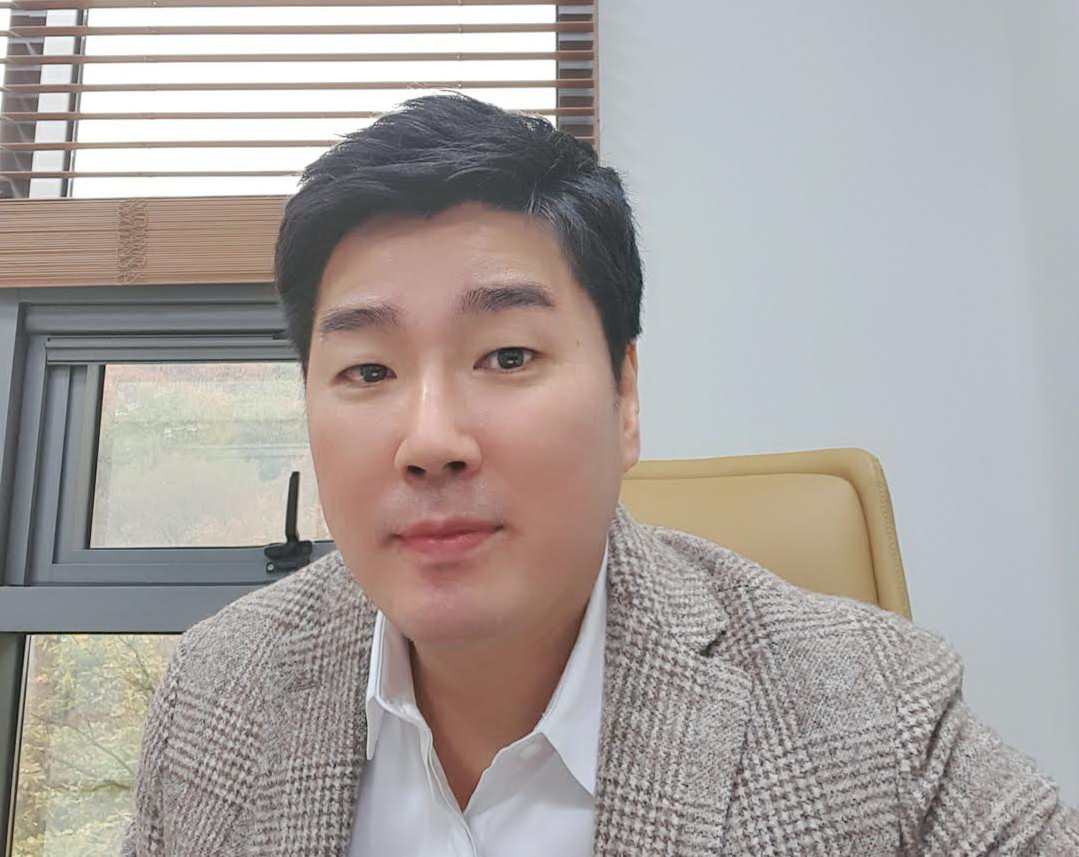
Interviewer: Please tell us how you then got into science and technology, and, more importantly how you met your partner Jinyoung Park?
Ri Ki: I met Jinyoung through a senior colleague of ours. Jinyoung had finished his research on anti-cancer drugs in the US and had returned to Korea. He hadn’t had a good experience since coming home. He sincerely wanted to help people and find a cure for cancer but he felt used by the big pharmaceutical companies. At our first meeting we drank a lot and talked about each other’s dreams. I asked Jinyoung why he started researching anti-cancer drugs. He answered that he couldn’t save the world but it would be good to live and die having been a little beneficial to others. This shocked me. At that time I was young and I think I was the person most frightened in the world of living and dying without a trace. The conversation connected us somehow. We recognised something in each other and started a business together with the motto being ‘Let’s save the world.’
Interviewer: That’s a big ambition, but you two really did in someway start to save the world. You began your business aiming to cure cancer and you went some way to succeeding in this. Can you tell me a bit about this time?
Ri Ki: The cure began with some inspiration from a traditional Korean medical remedy that had been around for 400 years. It was not easy to convert into modern medicine and we are still in the process of converting it to a pill but right now the treatment is available in a liquid form.
The mechanism of our medicine is homeostasis. Its aim is to return to the condition of body before cancer. In order to do so, the patient's immunity must be raised. Our treatment maximizes immunity by promoting the differentiation of NK cells or T cells, which are immune cells. That's why we were able to develop different treatments using the same technology, baldness, for example, and impotence.
Interviewer: This was an incredible achievement. Could you please tell me a little bit about how you treated one lady who had been in a coma for 10 years after a car accident?
Ri Ki: The late Professor Kim Il-Kwang, chair professor at Beijing Chemical Industry University, was one of our most respected scientists. He had a daughter who had been brain dead for 10 years due to a car accident. He looked all over the world for a cure and finally connected with us through a biotechnology scientist who was a mutual acquaintance. Professor Kim asked for the technical data on the medicine we had developed to cure cancer and studied it over one month. He decided that our drug’s technology, which strengthens immune cells and improves blood vessels, would be effective in treating his daughter and we started to treat her. After about two months, she was able to move and feel sensation for the first time. A year later she was able to move in a wheelchair. This was an absolutely amazing recovery to be part of. She had been lying in a hospital bed for 10 years only able to breath and after we treated her she could move once more. Professor Kim was so grateful to us that he passed on much of the knowledge and skills he had developed over his life. This really helped us moving forward with our new health technology projects such as very successful treatments for baldness, atopic skin diseases and impotence.
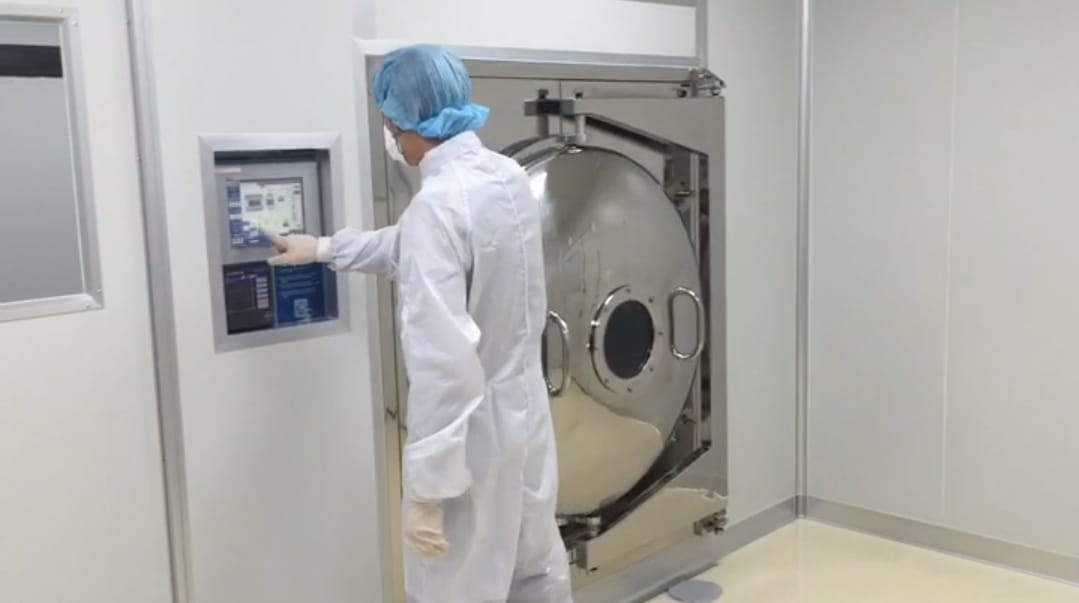
Interviewer: Over Covid, your fantastic products to sterilise germs and viruses in under ten seconds came to international attention. However, political and business interests stopped these becoming more widely used. Could you tell me a bit more about this time, which I know was very frustrating?
Ri Ki: Our company, Clobio, was created through investment by Optimus Asset Management, the largest asset management company in Korea. While we were preparing to make Clobio a listed company, the Covid-19 pandemic began. Clobio, which had a line of highly effective sterilisation products became famous, attracting a lot of business attention.
This should have been good for our company and we were excited - but the opposite happened. The political regime in Korea changed and Optimus Asset Management began to be suppressed for political reasons. Investment in Clobio was stopped and our dreams of becoming a listed company dashed, just as the world needed our products most. This was not only a scandal for us, but for the whole of Korea - Optimus Asset Management was a company worth 700 million dollars.
Interviewer: It must have been a very difficult time for you, but Clobio did recover. Could you please tell me what happened after this, how you met Lan Tschirky and how she helped you move forward with your work?
Ri Ki: When the dream of listing the company was thwarted, Clobio decided that we would sell our products ourselves. I met Lan whilst doing overseas sales. She was the type of person I’ve never met before. She put more importance on relationships and people than money and was very passionate and honest. I realised that the combination of Clobio’s skills and her connections would create a great synergy and we started to do business together. We have developed a new line of anti-virus products and are now working very hard on a revolutionary line of products that maintain food freshness for far longer than previously possible without additives or preservatives. We’re in a very exciting place.