The Ecuador Example
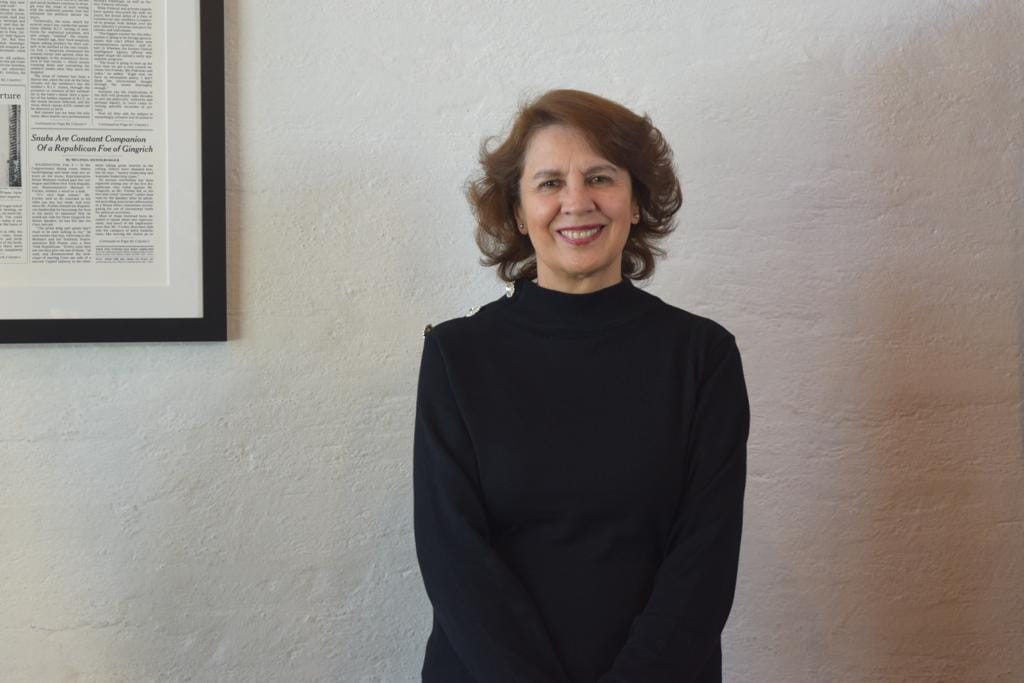
Despite the oil contained within Ecuador’s Amazon rainforest, the citizens of this under-resourced country have voted to maintain the natural environment instead of profiting from prospecting. Dr Rosalia Arteaga, first female Ecuadorian president and environment advocate, talks to Lan Space magazine about the importance of educating citizens as part of efforts to protect the Amazon, as well as her unique new project in the heart of historical Quito, where literacy, education and the environment come together in a new eco-library and museum.
Interviewer: Dear Dr. Rosalia, please tell us about your new project, a library and museum in the centro of Equador’s capital and your home, Quito.
Dr Arteaga: I am trying to refurbish an old house in the historical centre of Quito. Quito is one of the cities declared by UNESCO as part of humanity’s cultural heritage. Some years ago we received an old house from the municipality of Quito to create a community project. We are refurbishing it to transform it into an eco-library and museum. It is ecological because I believe that talking about and learning about the environment is one of the most important issues to keep alive today. I used to be the general secretary of the Amazon Cooperation Treaty Organization during a period from 2004 to 2007 and since then I have been studying and engaging with the environment. I have many books on the environment and I think it's a little selfish to keep them only for me. We are especially keen on attracting kids, teenagers and young people, many of whom live in the urban historical centre of Quito. The historical centre houses the headquarters of the government, the house of the president, some ministries, but there are still lot of people live there, with 97 schools in the centre alone. Most of them are public schools with working class students. They often don't know what to do with themselves after or before class, or where to study in the afternoons. One of the main ideas behind the refurbishment of this house is to give these young people a place to go and study and read. However we need to raise a lot of money and it's not easy in countries like Ecuador. But we are doing it. I hope that sometime towards the end of the year we can open the library and also a connected museum. In the museum we are going to put art, ecological, archaeological pieces as well as shells and stones that I have collected throughout my life. It will be an immersive museum, where, with digital help, we can make feel the visitors that they are in the middle of the ocean or they are in the middle of the jungle.
By immersing the visitor in these natural scenes we hope in some way to re-create and educate people on the richness of the Ecuadorian environment. In Ecuador we have several biomes. It's a small country but we have a fantastic amount of biodiversity. We have the coast bordering the Pacific Ocean. We have the Andean mountains, where Quito the capital is located. We also have the Amazon jungle and also, the Galapagos islands, which is part of the territory of Ecuador. We have all these biomes to show and to be proud of and we want to educate the kids in how to protect these biomes and to feel closer to them.
Interviewer: It’s a wonderful project. I’d like to ask you about setting up a library with books in this digital age. Mobile devices and social media have so much influence on young people especially today. What do you think is the value of introducing to them to the traditional book form today and the idea that they can go to a library and search out knowledge in a more physical, tangible way as opposed to using their phone?
Dr Arteaga: Today we need basic human values more than ever. I talk a lot about values because I think we lose our humanity if we don’t remember our human values. The idea with the museum is to introduce the young people to books but also to have plenty of programs with which to to attract them. So we’re using the digital world, of course, because we are going to have computers and Internet and the young people will be involved with these things. But the important point is that it is not only digital but a combination of digital with
traditional values. Another example of this is our school for leaders. They are having classes in a long distance way, using Zoom. But we also have classes in person. In both kinds of class we talk about values and we talk about ethics, we talk about the history of Ecuador and international affairs and how to do to preserve the values of our local people. The global world is very important but our local world is also important - it is with the local that you preserve identity. Local is a very pertinent word when we talk about what we are trying to do with students, with teachers, with the museum, eco-library and with all the other projects that we have.
Interviewer: It sounds like you're trying to take the best from globalisation and digitization and technology and marry it with the traditional local values of Ecuador and the unique landscape that you've got. I had no idea there was so much biodiversity in Ecuador. Are you worried for the future of this environment?
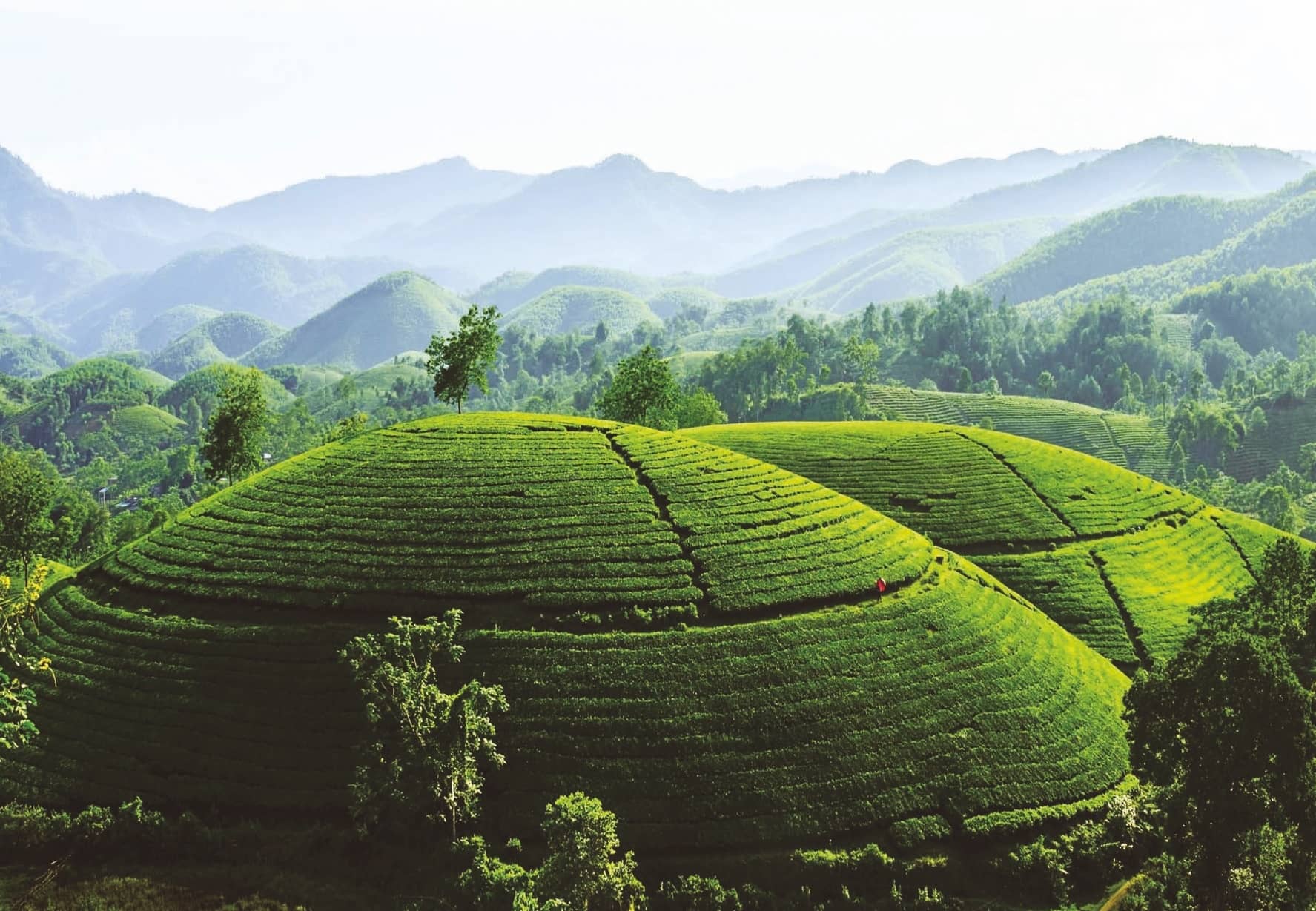
Dr Arteaga: Is there a future? I hope so. We have in the last months had a consultation with the people about preserving the Yasuni national park in the Amazon rainforest. It's one of the most biodiverse natural regions in the whole world - the Amazon jungle. But there is a lot of oil there. So to preserve this national park is a big cost for a country that needs to develop and needs the revenue that could come from oil exploration here. So it was really something when the Ecuadorian people said: don't touch the Yasuni. We prefer to maintain the oil inside the land than to exploit it.
But I hope we can attract revenue through our natural landscape, we are a unique country. The name for our country comes from the Ecuadorian line - we are right there in the middle of the world. And it makes us a very special place. We don't have four seasons. We have only one season. But we also have the Andean mountains which give us the altitude. In Quito we have spring weather almost all year. And of course, many people doesn't realise that the Galapagos islands are a part of Ecuador, which is the most impressive natural laboratory of the world, so important for Darwin and the discovery of the selection of species and evolution. And this is our territory. And then half of our territory is Amazonian. We have an enormous amount of richness and natural production that other countries don’t have it. Ecuador, for example, is one of the world’s best destinations for bird watching. But in other senses, we are a under-developed country with corruption. We have problems of poverty and we have also started to suffer narco guerrillas from Colombia. We are between Colombia and Peru and this means we are in the middle of a lot of drug crime.
Interviewer: You were general secretary to the Amazon Cooperation Treaty Organisation between 2004 and 2007, dealing with different countries who share the Amazon forest: Peru, Colombia, Brazil. How was that experience?
Dr. Arteaga: I was the general secretary of the Amazon Cooperation Treaty Organisation and I used to live in Brazil, in Brazilia, the capital, which are the headquarters. It's a unique organisation - the members are only Amazonian countries - the eight countries which share the Amazon basin. Brazil has the largest piece of the basin, of course, but what is interesting is if you think of small countries like Guiana or Suriname, is that all their territory is Amazonian - 100 percent. For Ecuador, 50% of our territory is Amazonian, and so of course this means the forest is very important for us. The Amazon as a whole makes up 40% of the territory of South America. 40%. It’s an enormous percentage of the continent. But it has not been taken care of. Governments mostly think about the Amazon in terms of resources to exploit and are not interested in creating an awareness of how important it is for our environment. Most of the Amazonian governments talk about how to colonise the Amazon. Imagine that. This is terrible for the flora and fauna but also for the Amazon locals. There are many people living in the Amazon, about 40 million people. And the policies of the different governments are different towards these people and the forest. The idea with the Amazon Cooperation Treaty Organisation was to create some guidelines for the Amazon. But it didn’t have the support of the every government so in the end, every government did what they wanted. There are a lot of illegalities in the Amazon - most of the coca plantations which produce cocaine are in the Amazon. It is a big problem. And there is a lot of trafficking of exotic species and also mining and oil exploitation. I'm not against the oil and mineral exploitation, but it has to be done with a lot of care. Probably the biggest problem in the Amazon, more even than mining and oil exploitation, is agriculture, cattle and soy farms which destroy the vegetation and the natural balance of the forest.
Interview: You were working as general secretary to the Amazon Cooperation Treaty Organisation between 2004 and 2007, before President Bolsonaro relaxed laws in Brazil on protecting the Amazon. It’s nearly 20 years since you first started there. Could you comment on whether you think the situation regarding Amazonian government protection of the forest has got better or worse?
Dr Arteaga: Worse. Unfortunately it's got worse. The pandemic and global recessions has meant that populistic governments in our countries are not paying any attention to protection -only how to get more money for themselves. It is a mystery, how this can be, but its true.
Interviewer: It's terrible but you see this phenomenon at COP 28 now regarding the environmental agreements. We should be coming together at such a critical time but in fact relations between countries seem to be getting worse.
Dr Arteaga: I am very sceptical about what's happening in the COPS, it is a global event with many governments who have agendas. I think it would be better to pay more attention to local governments who can actually see and feel what's happening in their territories and act more directly. I think the future has to be with local governments. This could mean municipalities, governors, or provinces - any form of government which stay close to local people and feel their needs more acutely.
Interviewer: To have people like you working in global politics but also working on the ground and building up communities feels very powerful. I wonder, with this local government philosophy in mind, whether you could comment on the upcoming World Economic Forum, one of the most globalised conferences in the world right now.
Dr Arteaga: There is a lot of expectations regarding WEF, but in the end, most people feel that only the rich are represented there. Of course, all leaders attend, including leaders of Amazonian countries. But in the end, there are simply more declarations which don’t often lead to action. When you see today what's happening around the world - wars in Ukraine, in Israel against Hamas, you have to reflect that global governance has in some way broken down. The United Nations was created to avoid new wars, especially a global war. But in a certain way, we have a global war now, because economically we are all affected by what is happening in Ukraine.
I think good community collaboration on local and global levels has a lot to do with education and how each person is responsible for his own conduct - his own care of the environment for example. If we do not provide a good quality of education, how can young people be aware of their responsibilities as humans? I was a teacher for almost 20 years, I started when I was 17. I put a lot of hope in education. With better education we can do more.
The work of governments is modulated because if you have a country of well educated people, then they can impose important measures regarding the environment for example, and people understand why these measure are being put in place.
Interviewer: You're known as being the first female president of Ecuador. I'm really interested to know how much being a woman affected your political career and how much it possibly helped or didn't help.
Dr Arteaga: Mine were very special circumstances. I was president only for a few days. I lost the presidency because I was a woman and I suffered a coup d’etat from Congress. They violated the constitution. More generally however, I think I opened the road for other women to enter politics. And this is for me probably the biggest thing that I could do - I was not only first female president but the first female minister of Education, Culture and Sports in my country as well as the first vice-president and and the first female general secretary of the Amazon Corporation Treaty Organisation. This makes me very proud but it has also been a big responsibility because a lot of young politicians and researchers look up to me. I’m often asked how we can avoid the machismo which still exists everywhere in Latin American politics. The responsibility of being a female role model has made me particularly careful of corruption. A lot of politicians in Ecuador have become known for corruption and it is a terrible blight on our country. I really try and press into my students at the school of leaders what a disease corruption is. I tell them I want them immunised against it.